New Hampshire, NH stretches across more climate zones than most people realize, and a drying strategy that works in one region can fall flat in another — our regional crews are matched to the conditions of their own part of the state.
Call +1-844-578-1604
No single-office bottleneck statewide
Flat-rate quote before any equipment runs
IICRC-certified technicians on every truck

Technicians working under our New Hampshire, NH banner carry the same IICRC certifications and hold to the same documentation standard no matter which region of the state they cover.
Dispatch for New Hampshire, NH runs 24 hours a day, with regional routing that gets a real technician on the phone quickly, regardless of which part of the state the call comes from.
Ongoing training matters more to us than a certificate on the wall — drying standards and equipment change, and our crews train against the current standard, not the one from five years ago.
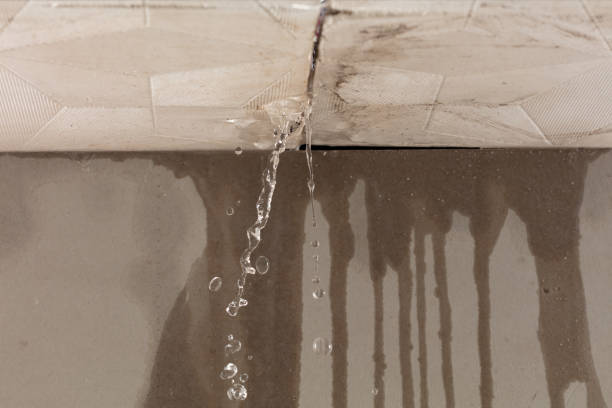
Water damage rarely starts as a dramatic flood — it usually starts small, and these are the signs worth acting on before the damage spreads further.
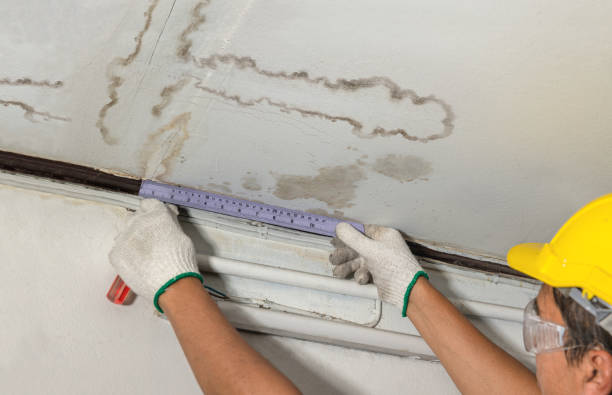
Fresh paint over an old stain can hide the problem visually for a month or two, right up until the drywall paper backing gives out.
A musty note that wasn't there a season ago usually means microbial growth has started somewhere behind a wall or under flooring, well before you can see anything.
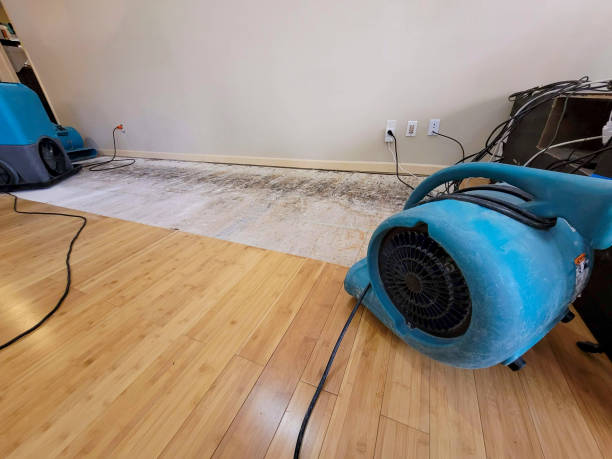
Hardwood cupping at the edges, laminate lifting at the seams, or carpet that stays spongy days after you last noticed water — all three point to moisture sitting against the subfloor.
A sudden increase in usage with no change in household habits is often the earliest sign of a slab leak, well before any visible water shows up.
Wallpaper that suddenly lifts at the seams after holding fine for years often signals a change in the humidity or moisture level inside that wall cavity.
Mold that returns after a bleach cleaning is a sign the moisture source behind it was never actually addressed.
If more than one of these sounds familiar, it's worth a professional moisture check sooner rather than later.
Treating Burst Pipe Water Damage as a single continuous job, rather than a series of handoffs, is what keeps timelines shorter and documentation consistent.
The equipment on our trucks scales up or down to the job, but the process — assess, extract, dry, verify, repair — doesn't change.
Moisture meters classify the water as Category 1, 2, or 3 on arrival, which determines whether it's a straightforward extraction or a full contamination protocol.
We don't call a structure dry based on a visual check — the moisture meter has the final say before equipment comes down.
Blackwater intrusions call for full PPE, controlled removal of porous materials that can't be sanitized, and hospital-grade disinfection before any reconstruction starts.
Antimicrobial treatment on studs, subfloor, and other porous surfaces happens during the drying phase, especially anywhere that stayed wet more than 48 hours.
Reconstruction starts from the actual drying documentation, not a fresh guess, which keeps the repair scope accurate.
We inventory and relocate contents that need to leave the affected area, then coordinate their return once the space is verified dry.


This is the same sequence every job follows, whether it's a single flooded room or a full commercial loss.
Dispatch gathers just enough detail to load the right equipment before the truck leaves the lot.
Moisture meters and thermal cameras trace exactly how far water has traveled, including inside walls and under flooring where it's invisible to the eye.
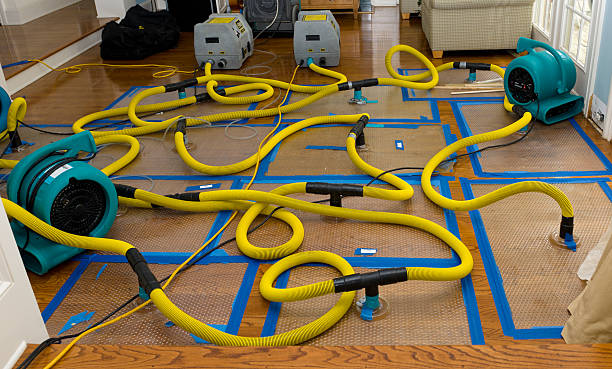
Standing water comes out first with commercial extraction equipment, then air movers and dehumidifiers go to work based on the readings just taken.
Moisture readings confirm the structure meets a safe drying standard before we hand over documentation and move into reconstruction.
None of these four things matter in isolation — it's the combination of licensing, speed, honest pricing, and a real guarantee that actually changes the outcome of a water emergency.
Every technician carries IICRC certification, and every crew works fully insured — documentation available whenever you want it.
Shorter drive times matter most in the first hour after a loss, which is exactly when local staging pays off.
You get a written estimate before equipment turns on, not a surprise invoice after the fact.
If a drying target isn't hit on schedule, equipment stays on-site at no extra charge until the readings confirm it's dry.
Every job closes with documented moisture verification, because a promise without data behind it isn't much of a promise.
Technicians aren't rewarded for closing jobs quickly, which keeps the incentive pointed at actually finishing the drying right.
Call +1-844-578-1604Our New Hampshire, NH coverage spans every major population center, with local dispatch handling routing so response times stay consistent statewide.
As New Hampshire, NH grows, our regional crew count grows with it, instead of stretching one central office thinner.

"Our water heater gave out overnight and by the time I found the pool of water it had already crept under the cabinets. The crew here in New Hampshire, NH had it extracted and drying equipment running before I finished my coffee."
Renee A., New Hampshire, NH"A storm backed water into our finished basement and the crew classified it, extracted it, and had dehumidifiers running that same afternoon. The invoice matched the quote to the dollar."
Owen D., New Hampshire, NH"Professional from the first call to the final walkthrough, and they re-tested moisture before closing the job instead of eyeballing it."
Fatima J., New Hampshire, NH"Fast response and clear pricing, and they handled the back-and-forth with my insurance adjuster directly, which saved me a genuinely stressful week."
Lucas P., New Hampshire, NH"Getting a daily drying log meant we always knew where the job stood instead of a vague verbal update."
Grace T., New Hampshire, NH"Our office flooded overnight and industrial equipment was already running before our staff arrived for the morning shift."
Nathaniel W., New Hampshire, NH"A cracked supply line under our kitchen sink went unnoticed for days, and by the time we called, the subfloor was saturated. They only replaced what actually tested wet, not the whole floor."
Bianca H., New Hampshire, NH"They explained the crawl space drainage issue in plain terms instead of technical jargon, and fixed it on the spot rather than scheduling a separate trip."
Derek S., New Hampshire, NH"Our upstairs bathroom leaked into the kitchen ceiling below and the crew traced it back to a failed wax ring on the toilet, not just patched the visible ceiling stain."
Melissa C., New Hampshire, NH"Being out of town when it happened was stressful enough — having a crew that could work directly with our property manager made it manageable."
Victor N., New Hampshire, NH